

If you’ve seen someone online getting called out for “glazing,” you’re probably wondering what it actually means. This word hit the internet hard and now shows up everywhere from TikTok comments to group chats. This guide breaks down every layer of glazing slang so you never feel lost again.
Key Definitions of “Glazing” in Slang
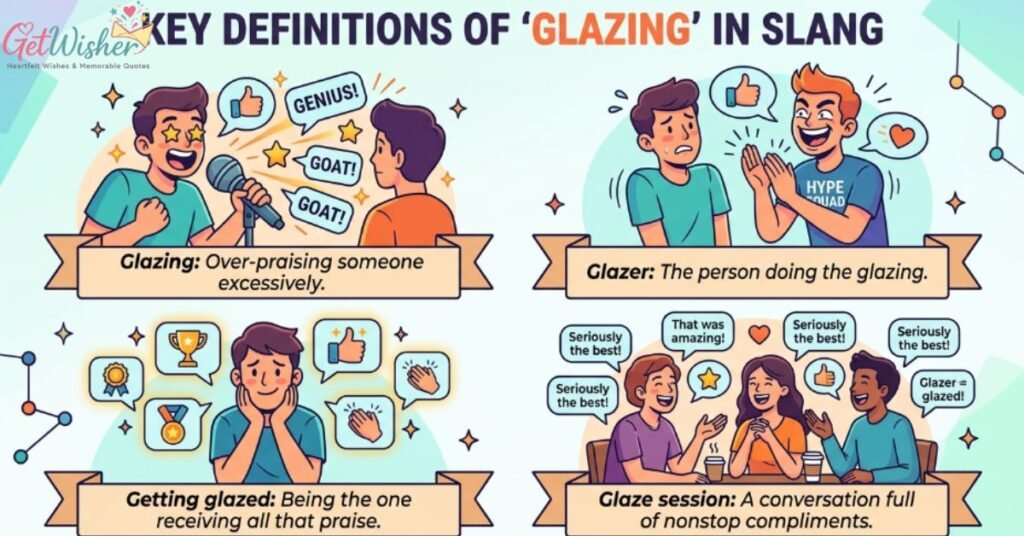
In slang, “glazing” refers to excessively praising someone, often obsessively or exaggeratedly. It’s when a person can’t stop hyping someone up, even when that person doesn’t deserve it. Think of it as extreme fan behavior disguised as normal admiration.
| Term | Meaning |
| Glazing | Over-praising someone excessively |
| Glazer | The person doing the glazing |
| Getting glazed | Being the one receiving all that praise |
| Glaze session | A conversation full of nonstop compliments |
The Origins of “Glazing” in Slang
The word “glazing” comes from the idea of putting a shiny gloss over something—making it look better than it really is. It started spreading heavily in Black internet culture and hip-hop communities online. From there, it jumped into mainstream social media faster than most slang words do.
Background of “Glazing”
Before it became slang, “glaze” always meant a shiny coating—like on a donut or ceramic pottery. The slang version kept that core idea but applied it to people. You’re basically “coating” someone in fake shine by praising them beyond what’s real.
The Deeper Meaning Behind “Glazing”
Glazing isn’t just about compliments—it carries a tone of mockery. When someone accuses you of gazing, they’re saying your admiration has crossed into embarrassing territory. It suggests you’ve lost your objectivity and can’t see the person’s flaws anymore.
Glaze Meaning in Text Messages
In text messages, “glazing” usually comes up when someone is fangirling or fanboying way too enthusiastically. A friend might text, “Bro, you’re glazing him again,” when you keep defending a celebrity. It signals that your bias is showing, and people around you are noticing.
Common text uses:
- “Stop glazing and be honest.”
- “Why are you gazing at him? Can’t deal with him so hard rn?”
- “The whole comment section was just glazing.”
- “I can’t with these glazers in the replies.”
Psychology Behind “Glazing” Behavior
People gaze because they feel a strong emotional connection to someone—often a celebrity, influencer, or even a crush. That attachment makes their brain filter out flaws and amplify positives. Psychologists call this kind of thinking “idealization,” and it’s very common in parasocial relationships.
Regional Variations of Glazing Slang
While “glazing” is used pretty broadly across the U.S. and UK, the intensity of its meaning can shift slightly by region. In some areas, it’s used more casually just to mean heavy complimenting. In others, especially in hip-hop Twitter culture, it carries a stronger “you’re embarrassing yourself” energy.
Glaze Slang Meaning vs. Other Slang
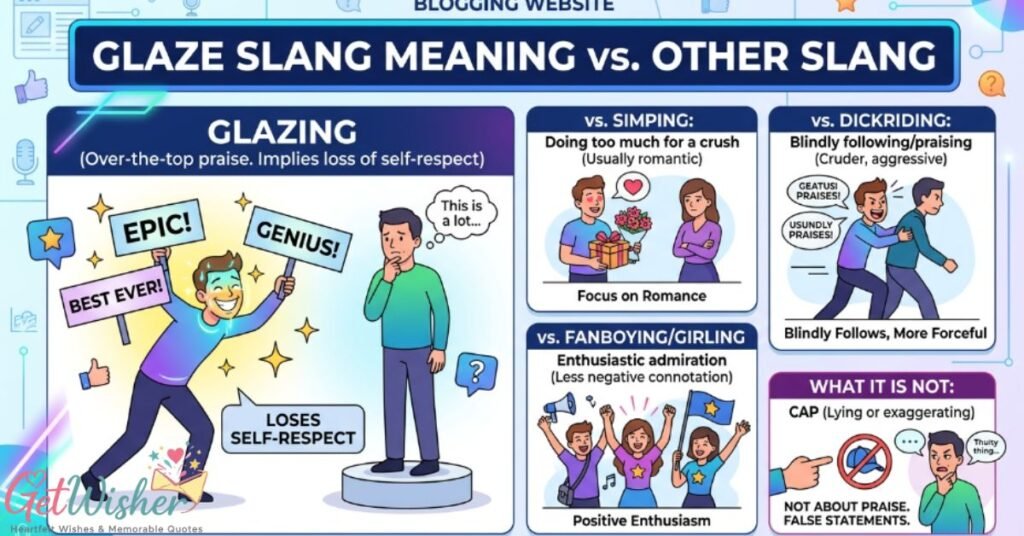
| Slang Word | Meaning | Key Difference |
| Glazing | Over-the-top praise | Implies loss of self-respect |
| Simping | Doing too much for a crush | Usually romantic in nature |
| Dickriding | Blindly following/praising | Cruder, more aggressive version |
| Fanboying/girling | Enthusiastic admiration | Less negative connotation |
| Cap | Lying or exaggerating | About false statements, not praise |
Cultural Impact of “Glazing” Slang
“Glazing” became more than just slang — it turned into a cultural check on blind loyalty. It gave people a fun but sharp word to call out when fan culture goes too far. It’s helped normalize the idea that you can admire someone without losing your critical thinking.
Usage in Different Contexts
Chat Conversations
In private chats, glazing usually comes up when a friend won’t stop defending someone. It’s a playful way to say, “You’re way too loyal right now.” It keeps conversations honest without sounding too harsh.
Examples:
- “Okay, glazer, we get it; gazing at you, love him.”
- “You’ve been glazing her all week, bro.”
- “Can we talk about this without you glazing over for 5 minutes?”
Social Media
On platforms like Twitter/X, TikTok, and Instagram, “glazing” is everywhere in comments. People call out fans in comment sections for hating their favorite artists. It’s become a common way to push back against fandoms that can’t take any criticism.
Examples:
- “This whole thread is just glazing; say something real.”
- “The Glazers are defending this bad album again.”
- “Stop glazing and admit the song flopped.”
Professional Settings
Glazing can also appear in workplace conversations, though usually in a more subtle way. Employees might call a coworker a “glazer” for constantly agreeing with the boss. It’s used to point out someone who is kissing up instead of being genuine.
Examples:
- “He glazes the manager every single meeting.”
- “Don’t just glaze over her idea—give real feedback.”
- “The glazing in that review was obvious to everyone.”
Pop Culture & Memes
Memes have turned glazing into a full cultural moment. Images of people on their knees bowing down became a visual shorthand for gazing online. TikTok trends regularly feature people joking about glazing their favorite celebs or game characters.
Different Meanings of “Glazing”
1. Self-Glazing Meaning Slang
Self-glazing refers to the act of excessively praising oneself or elevating oneself in public. It’s when someone brags in a way that feels desperate for validation. People online will quickly clap back with “Nobody asked you to self-glaze like that.”
2. Glazing Meaning in Construction
In construction, glazing refers to the process of fitting glass into windows, doors, or other structures. A glazier is the professional who does this kind of work. This meaning has nothing to do with the slang—it’s purely a trade term.
3. Glazing: Meaning, Slang, Etymology
The word evolved from the literal visual image of something shiny and polished. If you “glaze” someone with praise, you’re putting a bright, fake shine on them. It’s a creative metaphor that turned into one of the most used slang words of the 2020s.
Glazing vs. Ghosting: Understanding the Difference
| Glazing | Ghosting | |
| Action | Over-praising someone | Cutting off all contact |
| Emotion | Obsession or admiration | Avoidance or discomfort |
| Direction | Toward someone | Away from someone |
| Tone | Positive but excessive | Cold and dismissive |
| Used for | Celebs, crushes, idols | Romantic interests mostly |
Glazing and ghosting sit at opposite ends of the social behavior scale. One person gives too much attention while the other gives none at all. Both are considered unhealthy ways to interact with people.
Is “glazing” the same as “simping”?
Glazing and simping overlap, but they’re not identical. Simping usually involves doing favors, spending money, or chasing someone romantically. Glazing is more specifically about verbal praise and blind admiration. You can simp without glazing, and you can glaze without simping.
Quick comparison:
- Simping = doing too much for someone (actions-based)
- Glazing = saying too much about someone (praise-based)
- Both are losing yourself in admiration of another person
- Both are often mocked by peers online
When Did “Glazing” Become Popular?
“Glazing” started gaining real traction around 2021–2022 on Black Twitter and NBA fan pages. It exploded when sports fans used it to call out other fans defending mediocre players. By 2023 and 2024, it had fully crossed into mainstream Gen Z vocabulary everywhere.
How to Explain “Glazing” to Non-Social Media Users
Tell them it’s like being a superfan who refuses to see any flaw in their favorite person. It’s the online version of someone who always says, “They can do no wrong.” Once you explain it that way, most people immediately think of someone in their life who does exactly that.
Is Glazing the Same as Complimenting?
No — and that difference matters a lot. A compliment is honest, specific, and grounded in reality. Glazing is repetitive, exaggerated, and usually ignores obvious flaws. Complimenting someone once for good work is normal; defending them 24/7 regardless of what they do is glazing.
The line between the two:
- Saying “great song” = compliment
- Saying “this is the greatest song ever made by any human” is an exaggeration.
- Disagreeing with criticism once = normal
- Fighting every critic online every day is draining.
- Genuine praise = builds healthy admiration
- Glazing destroys your credibility
Do’s and Don’ts of Using Glaze Slang
✔ Do’s:
- Use it when calling out genuine over-praising behavior
- Use it casually with friends who understand slang
- Use it in social media comments where it fits naturally
- Use it to add humor to a conversation about fandoms
✘ Don’ts:
- Don’t use it in formal or professional writing
- Don’t use it to attack someone harshly or as a real insult
- Don’t overuse it—saying it too much makes it lose impact
- Don’t confuse it with simping when the context is different
Common Examples of “Glazing” in Sentences
These real-world style examples show exactly how glazing is used across different conversations:
- Bro has been supporting that rapper since 2019 and will not tolerate any negative comments.
- “The whole comment section is just glazing—nobody’s being real.”
- “She glared at her boss so hard in that meeting, it was painful to watch.”
- “Stop gazing at him like he’s perfect—he literally missed the shot.”
- “I like the show too, but you’re glazing over it at this point.”
- “Twitter glazers will defend anything their favorite does, no matter what.”
- “He was self-glazing in his own biobase; nobody would notice.”
- “The fanbase went full glaze mode after the album dropped.”
Tips to Respond When Someone is “Glazing”
When you spot glazing, how you respond matters. You want to be real without being rude about it. Here are the best ways to handle it:
- Stay calm—don’t mock them too hard; glazing usually comes from genuine passion
- Point out specifics—instead of saying “you’re glazing,” say “but what about this specific flaw?”
- Use humor—a light “okay glazer” is enough to make the point without a fight
- Ask questions that would steer the conversation. Do you feel the same if they did the opposite? “makes people think
- Redirect the convo — steer back to facts and specific examples rather than feelings
- Know when to drop it — hardcore glazers rarely change mid-argument; pick your battles
Conclusion
“Glazing” is a slang term that perfectly describes something we’ve all seen but never named. It’s funny, sharp, and surprisingly useful for calling out blind loyalty in the most relatable way. Whether you use it in texts, comments, or conversations, now you know exactly what it means and how to use it right.
Frequently Asked Questions
1. What does glazing mean in slang when someone uses it in a text message?
“Glazing” in slang means excessively praising or idolizing someone to an over-the-top degree, often to the point where it feels obsessive or unwarranted—like putting someone on an unrealistic pedestal.
2. How do you use the word “glazing” in a sentence when texting your friends?
You’d say something like, “Stop glazing him just because he scored one goal,” meaning stop worshipping or overhyping someone for a minor achievement.
3. Where did the slang term “glazing” originally come from, and when did it go viral?
“Glazing” slang evolved from the idea of being “glassy-eyed” or dazed with admiration, and it went mainstream on platforms like TikTok and Twitter around 2023–2024 before becoming a staple Gen Z term by 2026.
4. Is glazing a positive or negative word when used in internet slang?
“Glazing” is almost always used negatively or mockingly—it’s typically a criticism calling out someone for being a sycophant, a fanboy, or an over-the-top admirer of a celebrity, athlete, or public figure.
5. What is the difference between glazing and simping in modern slang texting?
While “simping” refers specifically to excessive romantic devotion toward someone, “glazing” is broader—it covers obsessive praise toward anyone, including celebrities, athletes, or even brands, with no romantic element required.
6. How can I tell if someone is calling me out for glazing in a comment or reply?
If someone replies to your comment with “bro you’re glazing,” “the glazing is real,” or “stop glazing,” they’re telling you that your praise sounds exaggerated, blind, or embarrassingly over-enthusiastic.
7. What are some common examples of glazing slang being used on social media in 2026?
Common examples include “The glazing in this comment section is insane.” “You glazed him the entire video,” or “That whole podcast was just 45 minutes of glazing, Elon”—all meaning nonstop, uncritical admiration.
8. Can the word “glazing” be used as a noun, verb, or adjective in everyday texting?
Yes—glazing works as all three. As a verb: “Stop glazing him.” As a noun: “The glazing is embarrassing.” As an adjective (glazed): “You sound completely glazed over that guy.”
9. Is glazing slang only used by Gen Z, or do older generations use it too in 2026?
While “glazing” originated in Gen Z internet culture, it has crossed over into mainstream use by 2026, with millennials and even some older social media users regularly using it in comments, podcasts, and casual conversation
10. What should I say instead of “gazing” if I want to compliment someone without sounding like I’m overdoing it?
Instead of glazing, try measured praise like “He played well today” or “She’s genuinely talented”—keeping your admiration specific and grounded so it reads as a real opinion rather than blind idolization.

I’m Luna, an AI content writing professional with 3 years of experience, dedicated to crafting meaningful prayers, Bible-based messages, and inspiring blessings.